Citizen

Image
Engagement and Services

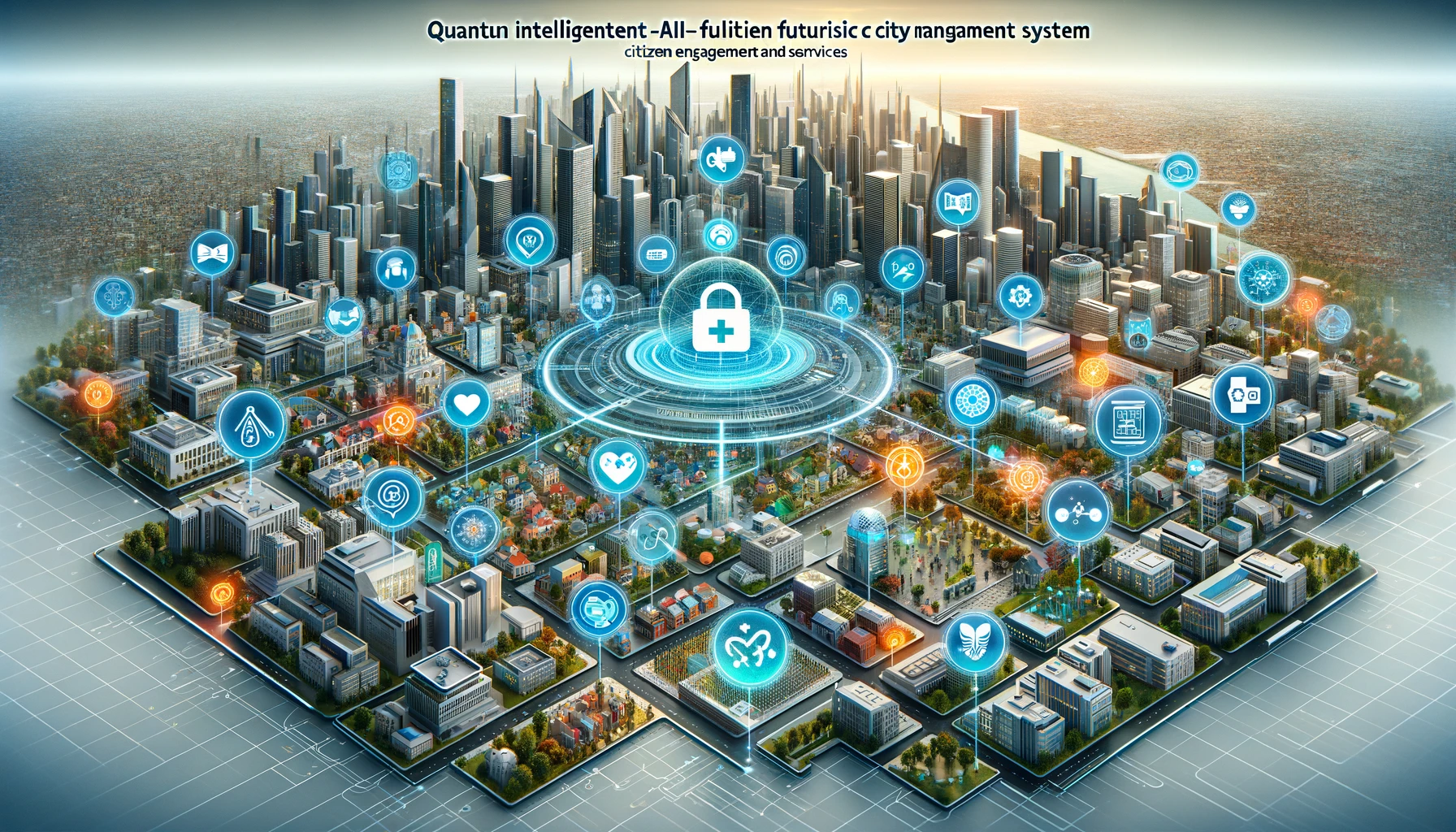
Citizen Engagement and Services in a Quantum Intelligent Futuristic City Management System focus on enhancing the interaction between the city and its residents, improving service delivery, and actively involving citizens in urban governance.

Image

Key aspects and capabilities of our system.

Image
1. Interactive Platforms for Feedback and Participation: Implementing digital platforms where citizens can provide feedback, participate in polls, and engage in public discussions. These platforms foster a two-way dialogue between city officials and residents.
Image
A wide conceptual diagram visualizing Interactive Platforms for Feedback and Participation for Citizen Engagement and Services in the context of a Quantum Intelligent Futuristic City Management System. The diagram should feature a panoramic view of a futuristic cityscape with advanced, interconnected buildings and smart infrastructure. Integrate elements representing interactive platforms, such as digital kiosks, public touchscreens, and social media interfaces, all designed for citizen feedback and participation. These platforms should be depicted as hubs of engagement, with citizens actively using them to communicate with city officials, provide feedback, and participate in civic decision-making. Highlight the role of these platforms in fostering a responsive and inclusive urban environment, where citizens' voices are heard and contribute to the improvement of services and governance. The overall design should convey the concept of an advanced, connected city that prioritizes citizen engagement and leverages technology for public participation and service enhancement.
Image
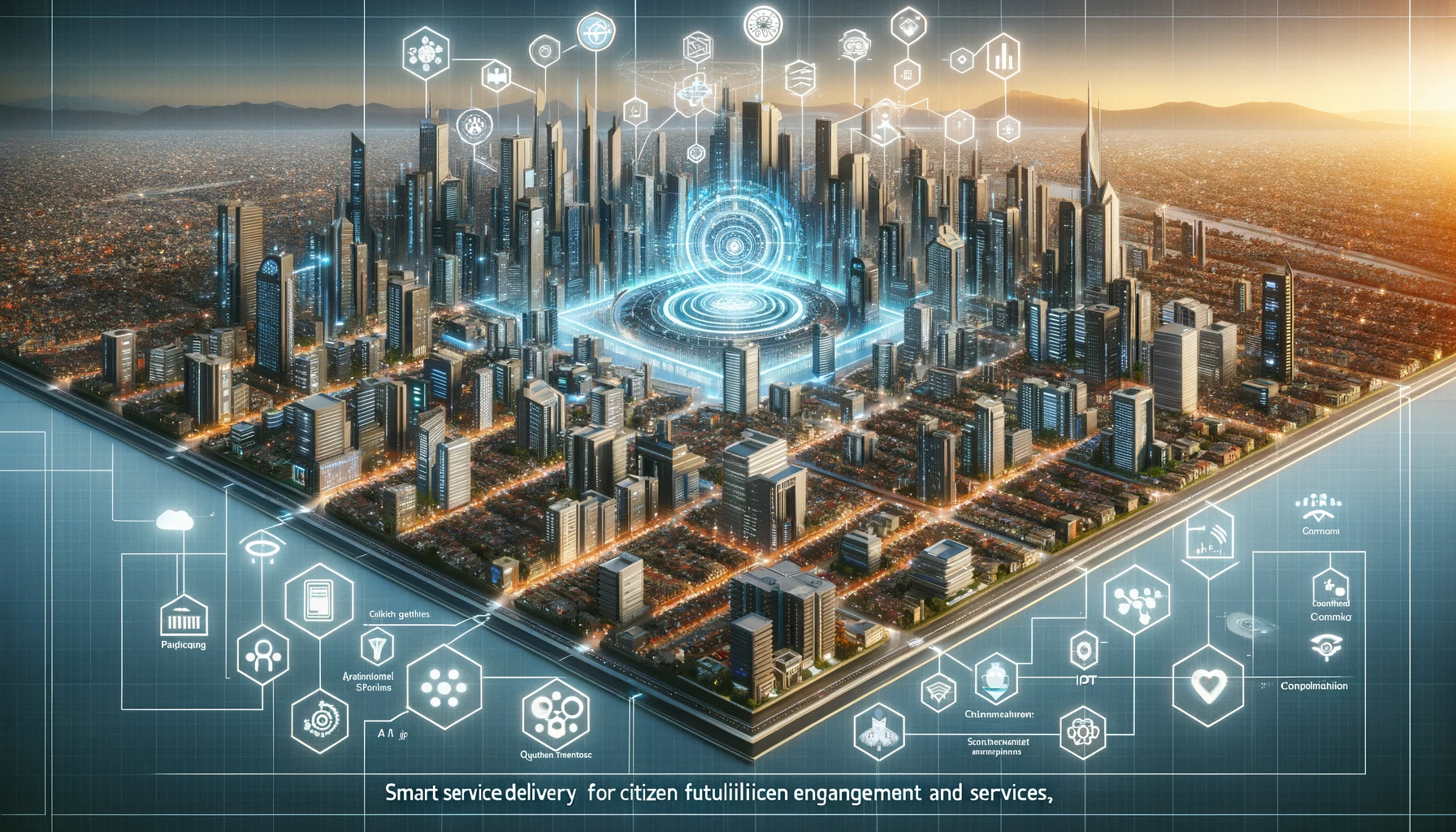
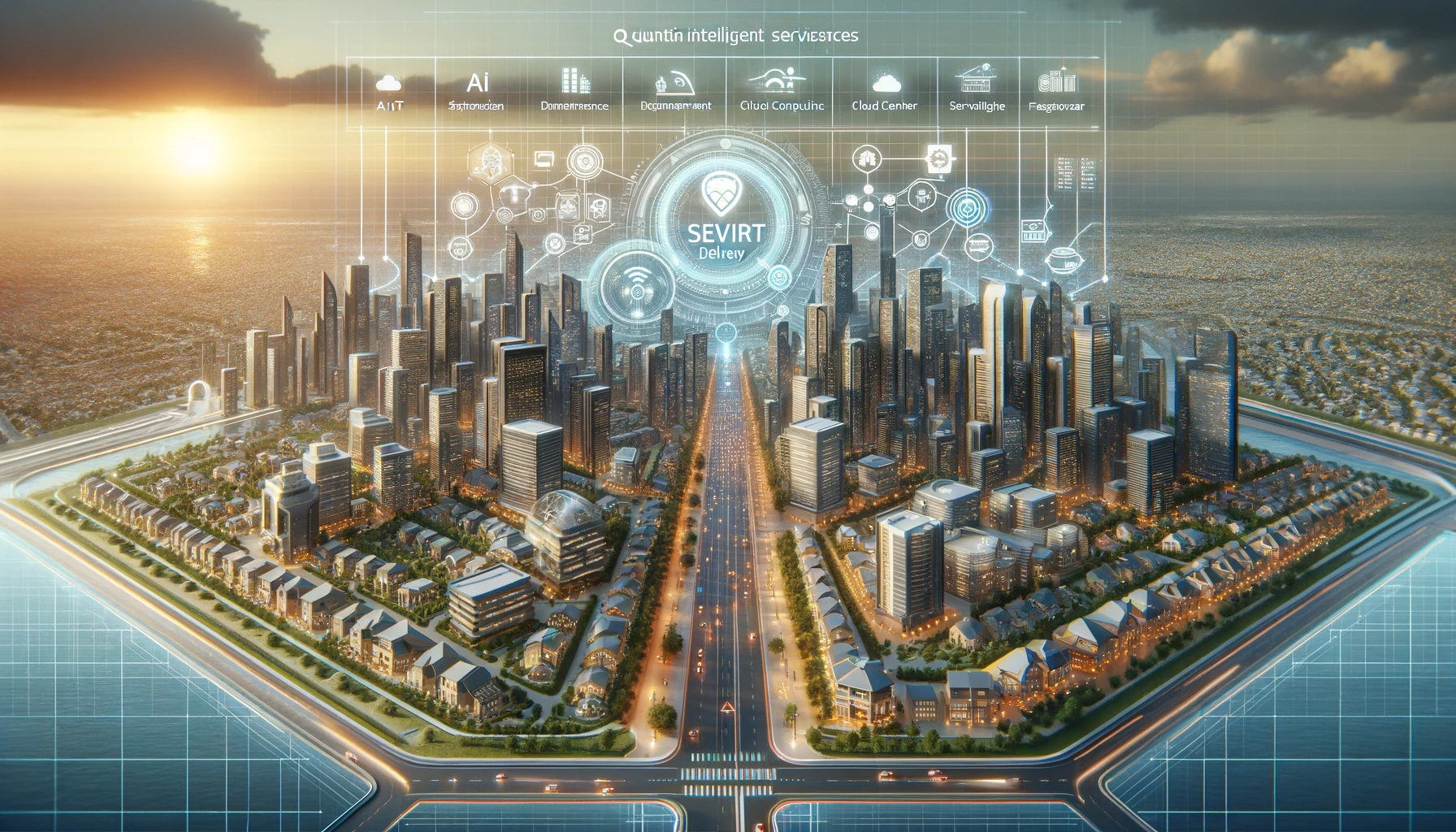
2. Smart Service Delivery: Using technology to streamline and personalize city services. This includes online portals for accessing municipal services, mobile apps for reporting issues, and AI-powered chatbots for instant assistance.
Image
A wide conceptual diagram visualizing Smart Service Delivery for Citizen Engagement and Services, especially in the context of a Quantum Intelligent Futuristic City Management System. The diagram should illustrate a panoramic view of a futuristic cityscape, highlighting smart service delivery systems. Include elements such as AI-powered public service kiosks, automated citizen service centers, and digital platforms for service requests and feedback. Show these systems as seamlessly integrated into the urban environment, interconnected with residential, commercial, and public areas. Highlight the use of advanced technologies like AI, IoT, and cloud computing in delivering efficient and personalized services to citizens. Emphasize the role of these smart services in enhancing citizen engagement, improving accessibility, and streamlining urban services. The overall design should convey a city that leverages cutting-edge technology to provide responsive, efficient, and user-friendly services to its residents.
Image
3. Enhanced Communication Channels: Developing various channels, like social media, mobile apps, and digital kiosks, to keep citizens informed about city news, events, and emergency alerts.
Image
A wide conceptual diagram visualizing Enhanced Communication Channels for Citizen Engagement and Services, especially in the context of a Quantum Intelligent Futuristic City Management System. The diagram should depict a futuristic cityscape, focusing on advanced communication networks. Include elements like high-speed internet infrastructure, smart communication hubs, and interactive citizen portals. Show these communication channels as vital links between the city administration and its residents, facilitating transparent and efficient information flow. Highlight features such as real-time public announcements, digital feedback systems, and mobile apps for city services. Emphasize the use of technology in enabling direct and continuous dialogue between citizens and city officials, enhancing community involvement and service responsiveness. The overall design should convey a city that uses state-of-the-art communication networks to foster a connected, informed, and actively engaged community.
Image
4. Community Involvement in Planning: Encouraging citizen participation in urban planning processes through workshops, town hall meetings, and online forums, ensuring their voices are heard in decisions that affect them
Image
A wide conceptual diagram visualizing Enhanced Communication Channels for Citizen Engagement and Services, especially in the context of a Quantum Intelligent Futuristic City Management System. The diagram should depict a futuristic cityscape, focusing on advanced communication networks. Include elements like high-speed internet infrastructure, smart communication hubs, and interactive citizen portals. Show these communication channels as vital links between the city administration and its residents, facilitating transparent and efficient information flow. Highlight features such as real-time public announcements, digital feedback systems, and mobile apps for city services. Emphasize the use of technology in enabling direct and continuous dialogue between citizens and city officials, enhancing community involvement and service responsiveness. The overall design should convey a city that uses state-of-the-art communication networks to foster a connected, informed, and actively engaged community.
Image
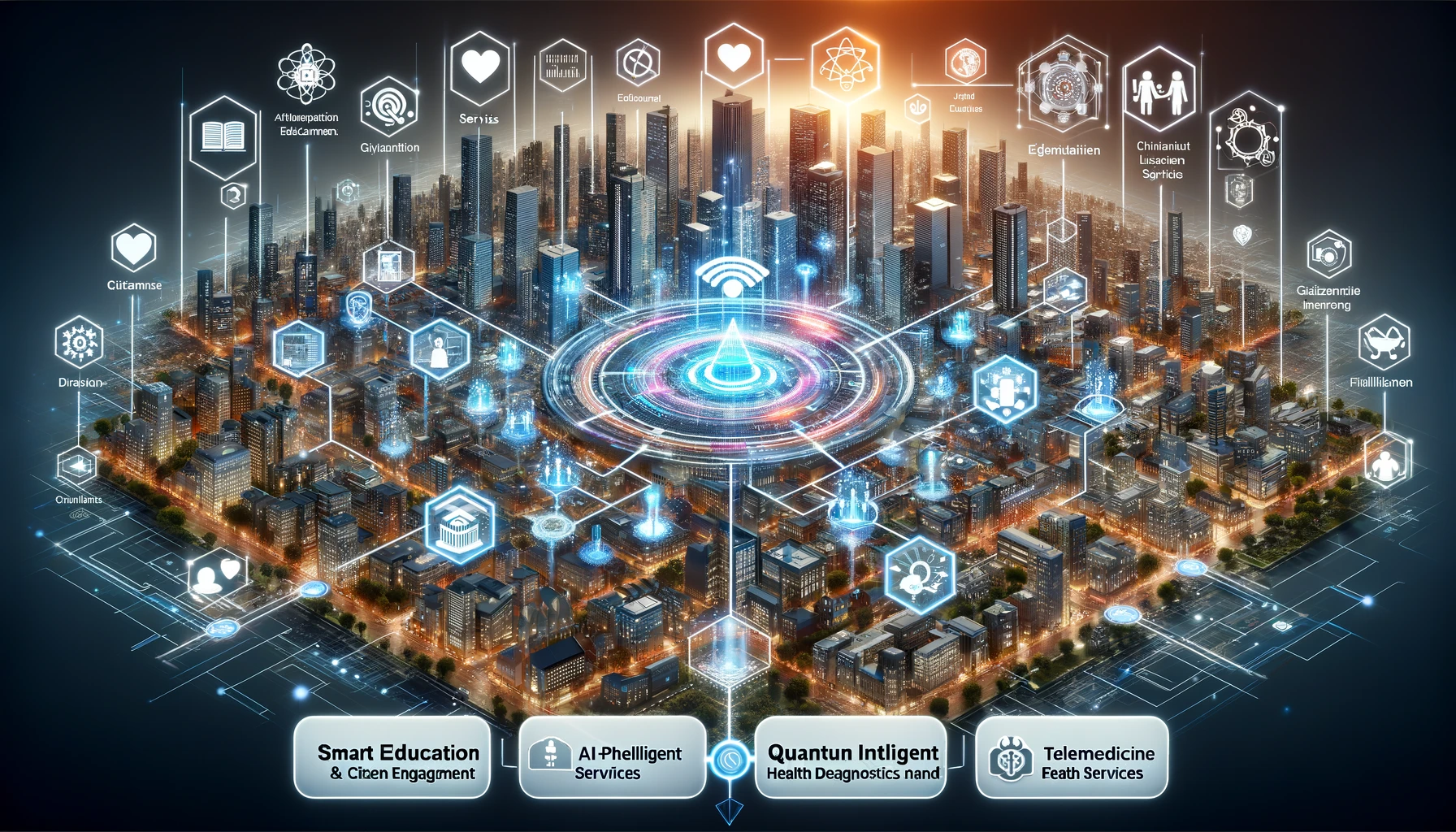
5. Smart Education and Health Services: Leveraging technology to improve access to education and healthcare services, such as through e-learning platforms and telemedicine services.
Image
A wide conceptual diagram visualizing Community Involvement in Planning for Citizen Engagement and Services, especially in the context of a Quantum Intelligent Futuristic City Management System. The diagram should display a panoramic view of a futuristic cityscape, emphasizing the active involvement of the community in urban planning. Include elements such as public consultation forums, collaborative design workshops, and digital platforms for community input. Show these participatory platforms as key components of the city's planning process, connecting citizens directly with urban developers and policymakers. Highlight the use of interactive tools and data analytics to gather and analyze community feedback, enabling residents to directly influence city development. Emphasize the importance of this community involvement in creating a city that is responsive to the needs and aspirations of its people. The overall design should convey a city that values and integrates the voices of its community in shaping a sustainable, inclusive, and vibrant urban future.
Image
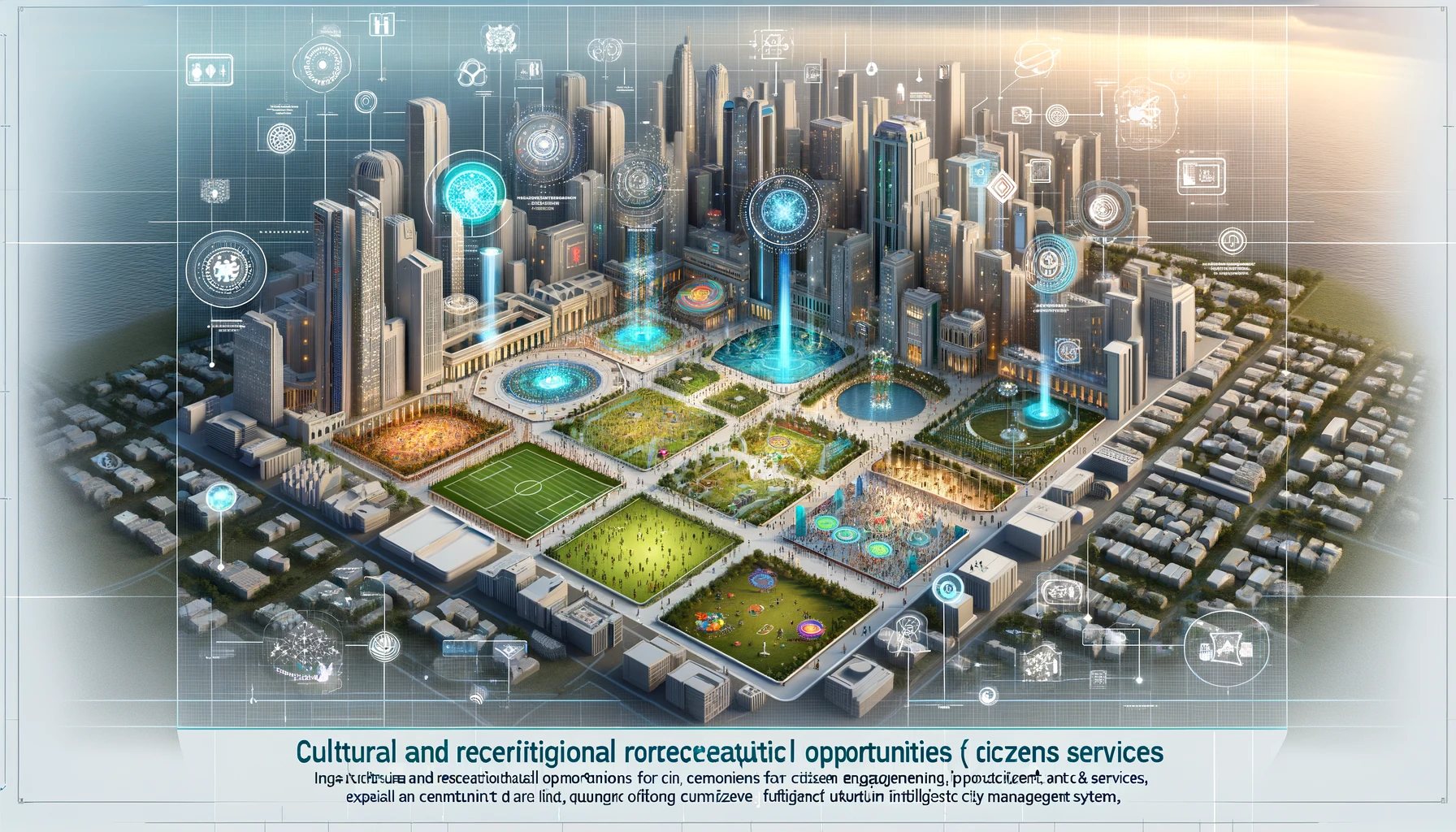
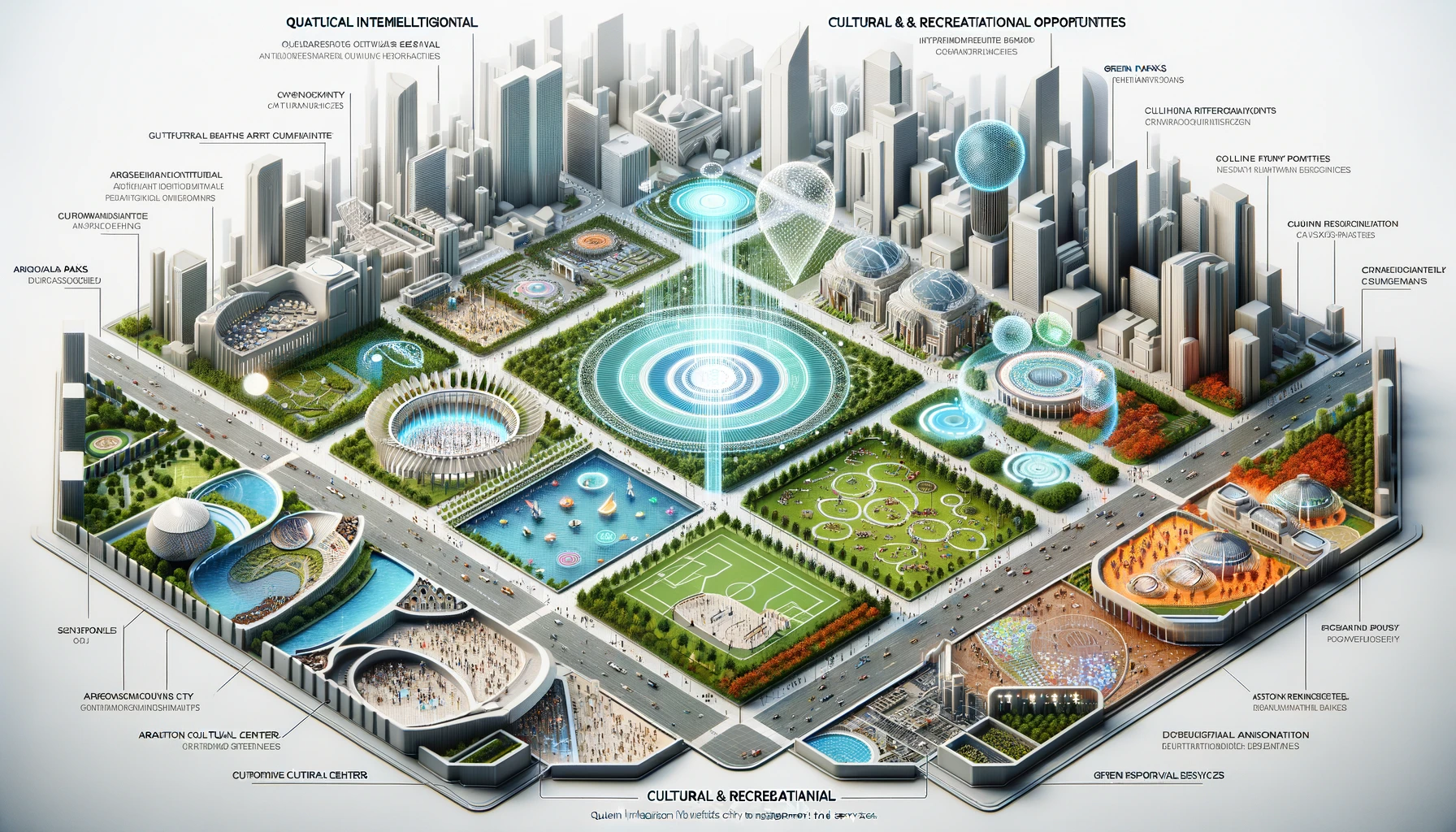
6. Cultural and Recreational Opportunities: Using technology to enhance cultural and recreational experiences, such as augmented reality tours of historical sites or apps that provide information on local events.
Image
A wide conceptual diagram visualizing Community Involvement in Planning for Citizen Engagement and Services, especially in the context of a Quantum Intelligent Futuristic City Management System. The diagram should display a panoramic view of a futuristic cityscape, emphasizing the active involvement of the community in urban planning. Include elements such as public consultation forums, collaborative design workshops, and digital platforms for community input. Show these participatory platforms as key components of the city's planning process, connecting citizens directly with urban developers and policymakers. Highlight the use of interactive tools and data analytics to gather and analyze community feedback, enabling residents to directly influence city development. Emphasize the importance of this community involvement in creating a city that is responsive to the needs and aspirations of its people. The overall design should convey a city that values and integrates the voices of its community in shaping a sustainable, inclusive, and vibrant urban future.
Image
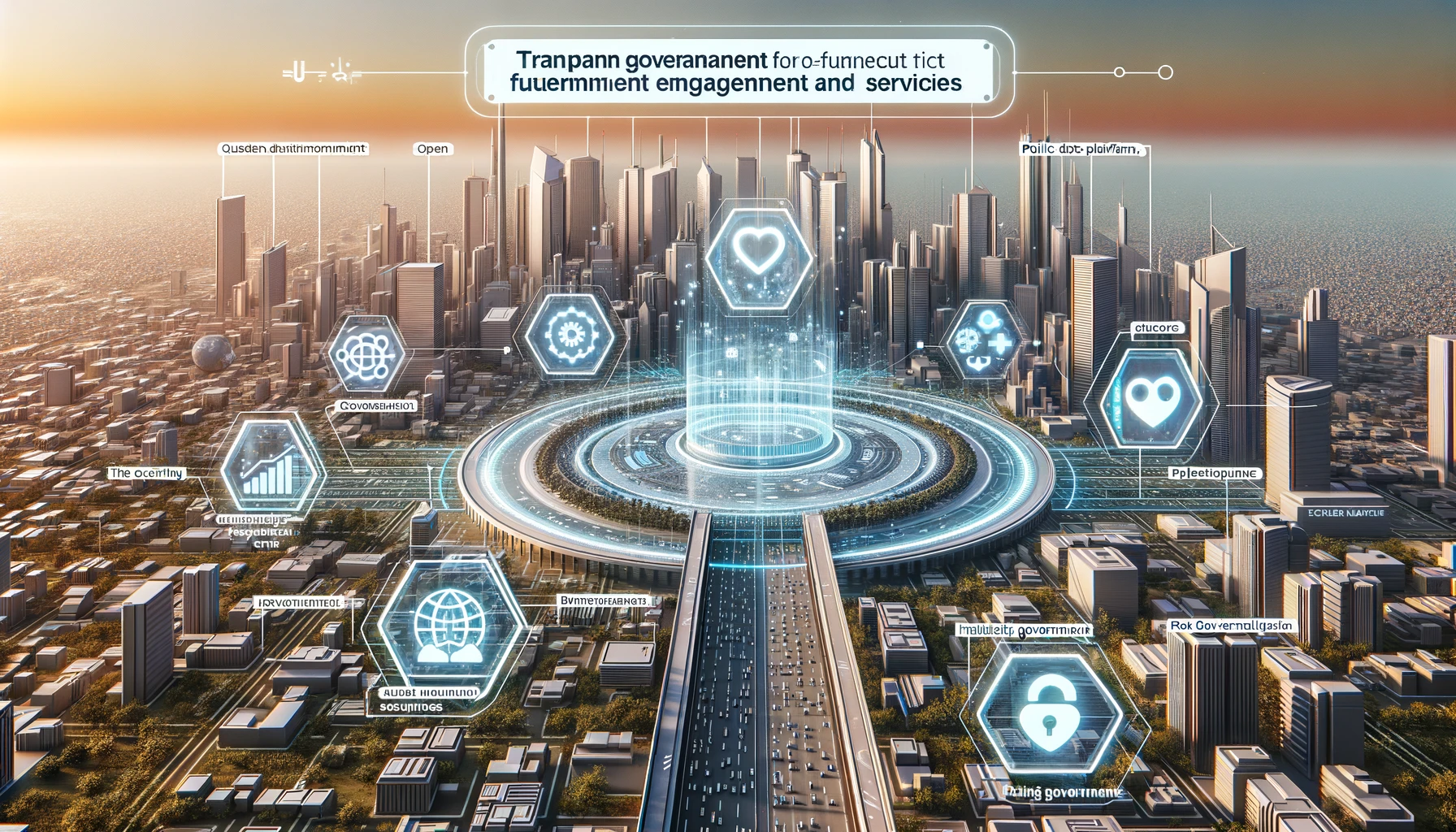
7. Transparent Governance: Ensuring transparency in city management and decision-making processes, so citizens understand how decisions are made and how public funds are used.
Image
A wide conceptual diagram visualizing Transparent Governance for Citizen Engagement and Services, especially in the context of a Quantum Intelligent Futuristic City Management System. The diagram should depict a panoramic view of a futuristic cityscape, emphasizing the elements of transparent governance. Include features such as open data platforms, public decision-making forums, and real-time government accountability systems. Show these elements as integral to the governance structure, promoting transparency and trust between the city administration and its citizens. Highlight the use of technology in facilitating this transparency, like blockchain for secure data sharing and AI for analyzing public feedback. Emphasize the role of transparent governance in empowering citizens, fostering trust, and encouraging active participation in civic matters. The overall design should convey a city that is committed to open, accountable, and participatory governance, ensuring a responsive and trustworthy administration.
Image
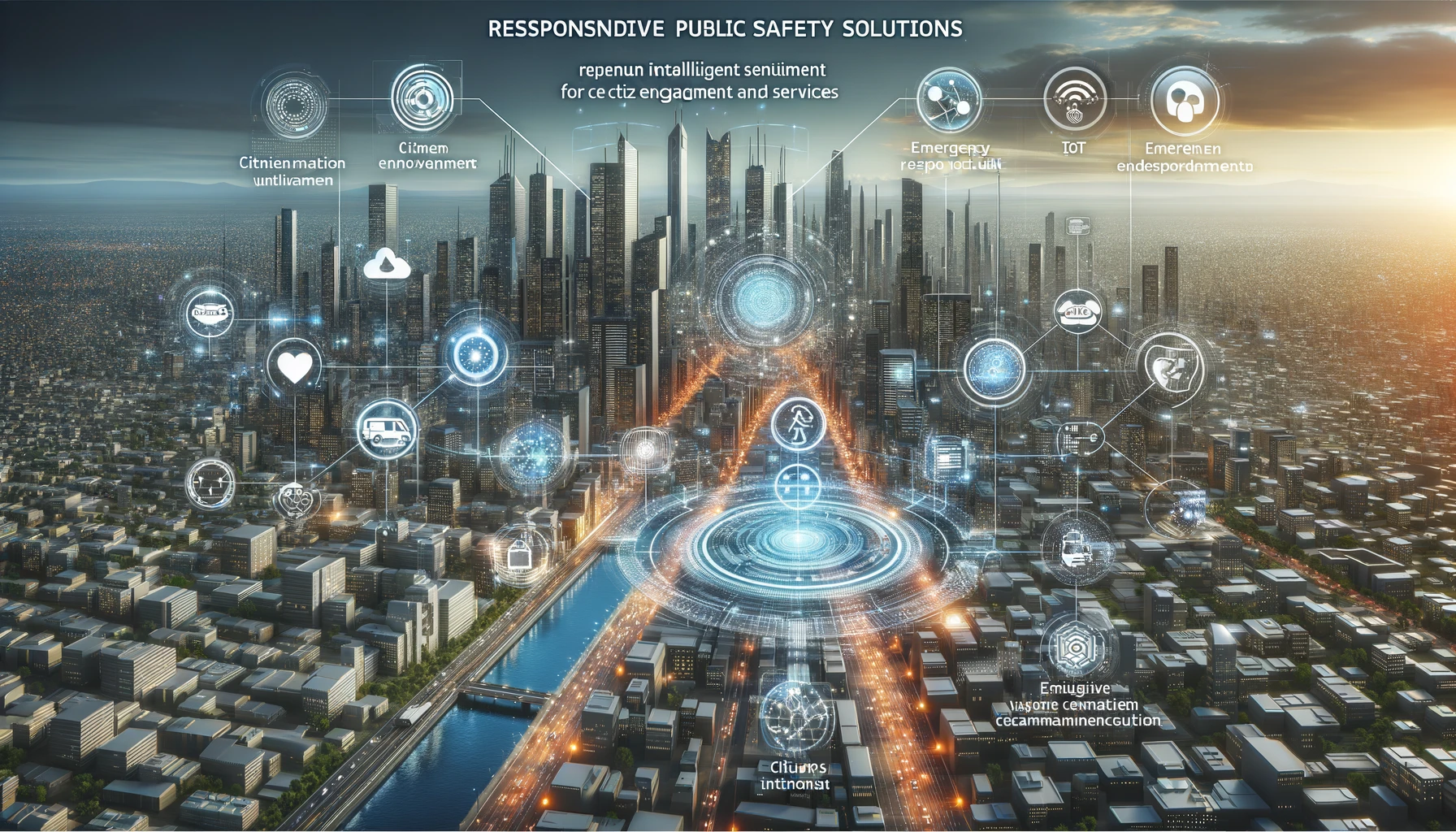
8. Responsive Public Safety Solutions: Implementing smart technologies for public safety, including emergency response systems that citizens can easily access during crises.
Image
A wide conceptual diagram visualizing Responsive Public Safety Solutions for Citizen Engagement and Services, especially in the context of a Quantum Intelligent Futuristic City Management System. The diagram should feature a panoramic view of a futuristic cityscape, focusing on advanced public safety measures. Include elements such as smart surveillance systems, emergency response units, and public safety communication networks. Show these systems as deeply integrated into the city's infrastructure, providing real-time monitoring and rapid response capabilities. Highlight the use of AI and IoT technologies in enhancing public safety, like predictive analytics for crime prevention and automated emergency alerts. Emphasize the role of these systems in ensuring the safety and security of citizens, while maintaining transparency and respecting privacy. The overall design should convey a city that utilizes cutting-edge technology to provide responsive, efficient, and trustworthy public safety services to its residents.
Image
9. Sustainability Initiatives: Engaging citizens in sustainability initiatives, such as recycling programs or community gardens, encouraging active participation in environmental stewardship.
Image
A wide conceptual diagram visualizing Sustainability Initiatives for Citizen Engagement and Services, especially in the context of a Quantum Intelligent Futuristic City Management System. The diagram should depict a futuristic cityscape, highlighting various sustainability initiatives. Include elements such as renewable energy projects, waste reduction programs, and sustainable transportation systems. Show these initiatives as key parts of the city's efforts to promote environmental health and sustainability. Highlight the involvement of citizens in these initiatives, such as community-led recycling programs, public participation in green transportation planning, and local renewable energy cooperatives. Emphasize the use of technology in supporting these sustainability efforts, like smart recycling bins, data-driven public transit systems, and IoT-enabled energy management. The overall design should convey a city that actively involves its citizens in sustainability efforts, leveraging technology to create a greener, more sustainable urban environment.
Image
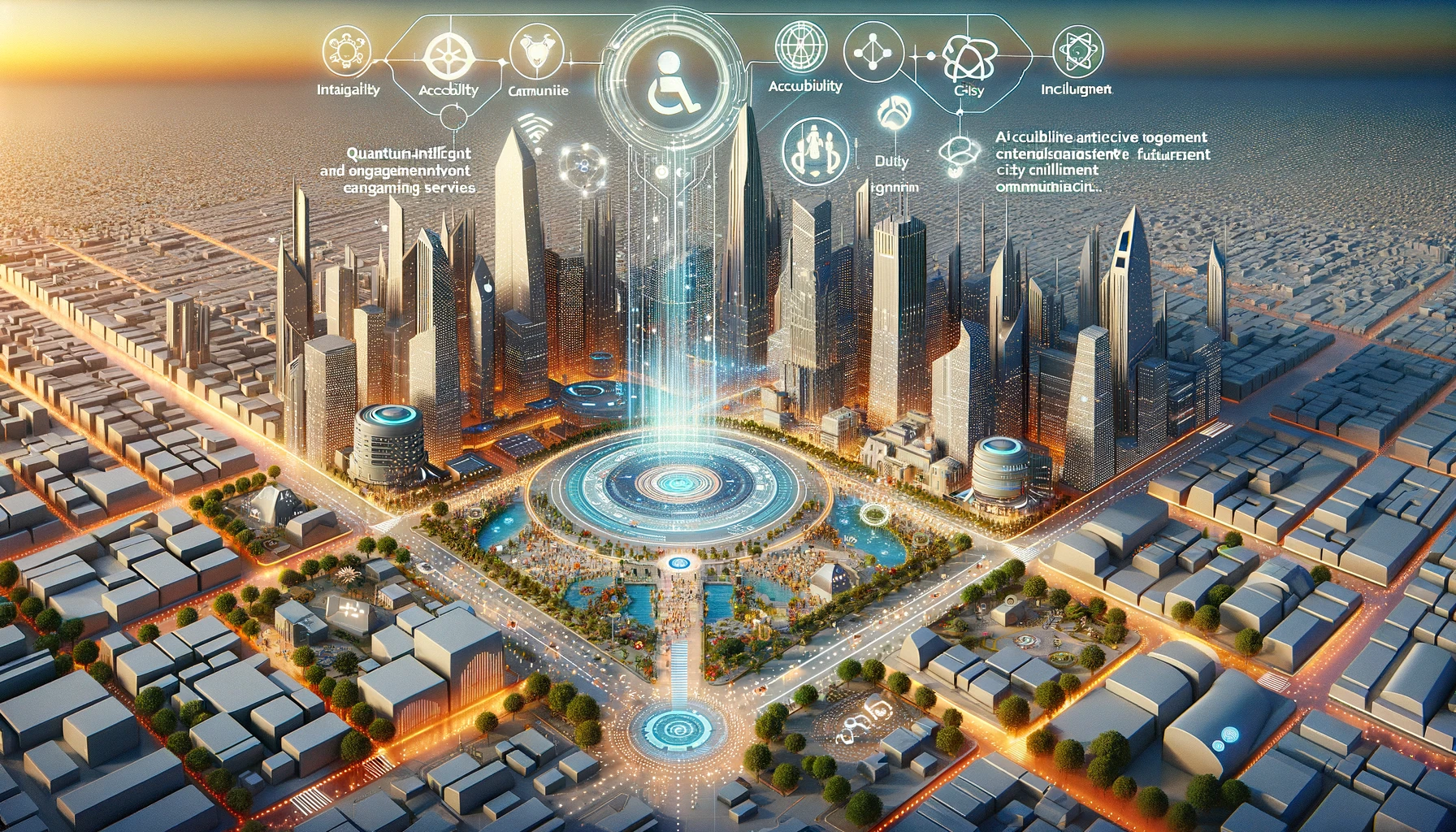
10. Accessibility and Inclusivity: Ensuring that all citizen engagement and service platforms are accessible and inclusive, catering to the diverse needs of all city residents, including those with disabilities.
Image
A wide conceptual diagram visualizing Accessibility and Inclusivity for Citizen Engagement and Services, especially in the context of a Quantum Intelligent Futuristic City Management System. The diagram should depict a panoramic view of a futuristic cityscape, focusing on the integration of accessibility and inclusivity in urban design. Include elements such as barrier-free public spaces, inclusive community centers, and adaptive technologies for various abilities. Show these features as essential components of the city's infrastructure, ensuring that all citizens, regardless of ability or background, can fully participate in city life. Highlight the use of advanced technologies like AI-assisted accessibility tools, universal design in public facilities, and digital platforms for inclusive communication. Emphasize the city's commitment to creating an environment that values diversity and promotes equal access for everyone. The overall design should convey a city that champions accessibility and inclusivity, making it a welcoming and accommodating place for all its residents.

Let's work together