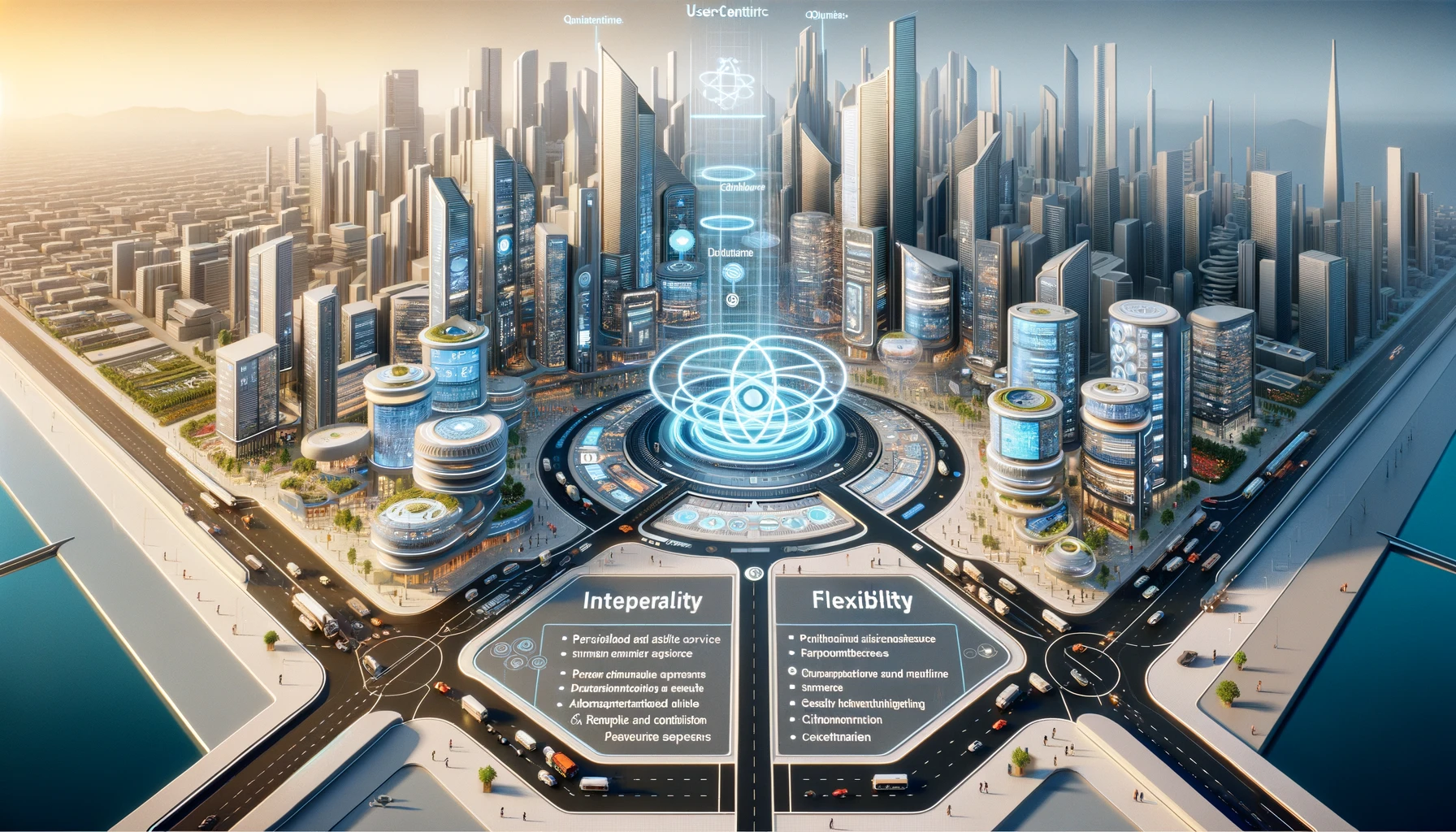
Interoperability

Image

and Flexibility

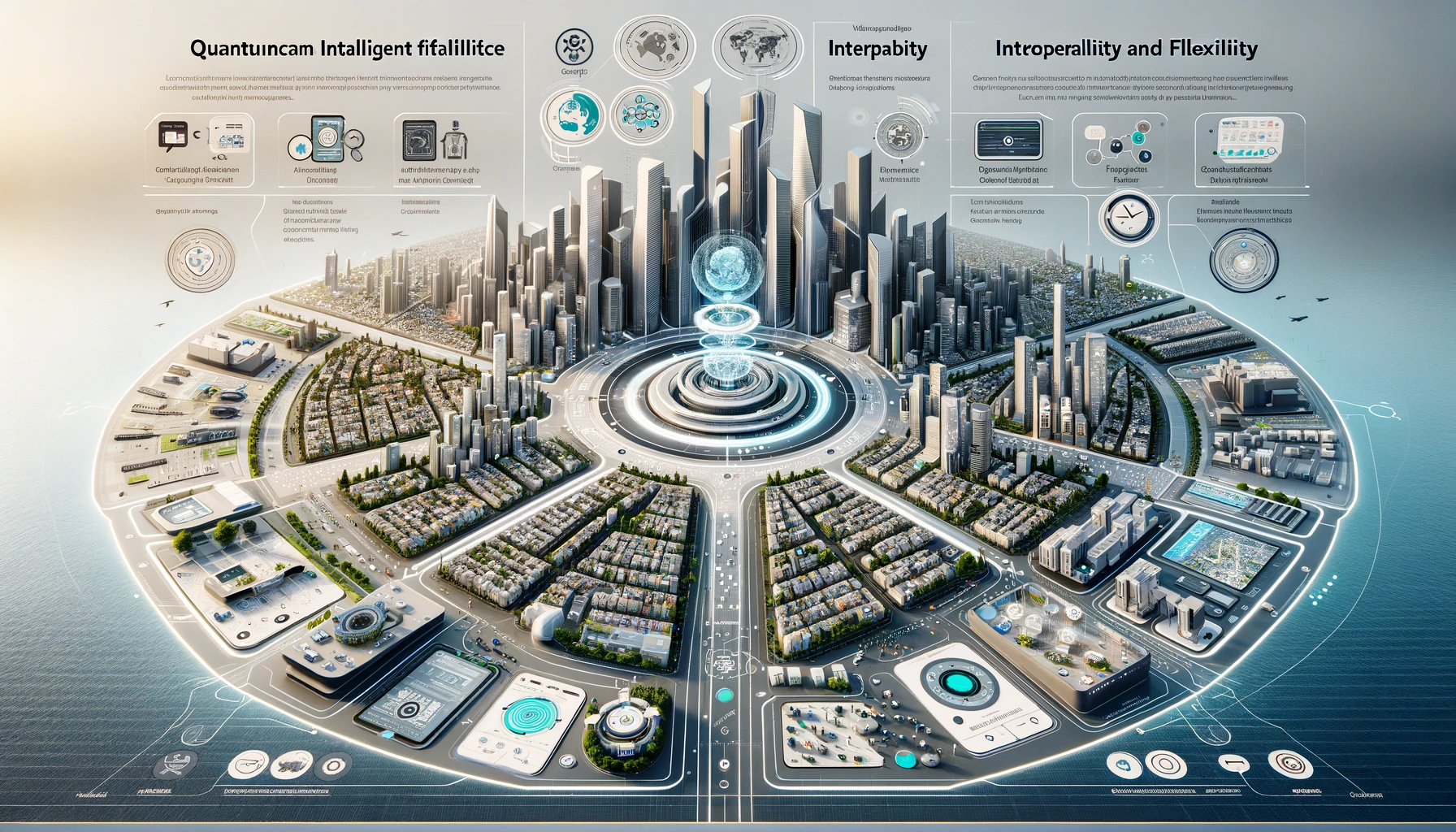
Interoperability and Flexibility are crucial elements in the design and implementation of a Quantum Intelligent Futuristic City Management System. These aspects ensure the system can seamlessly integrate various components and adapt to evolving urban needs.

Image

Key aspects and capabilities of our system.

Image
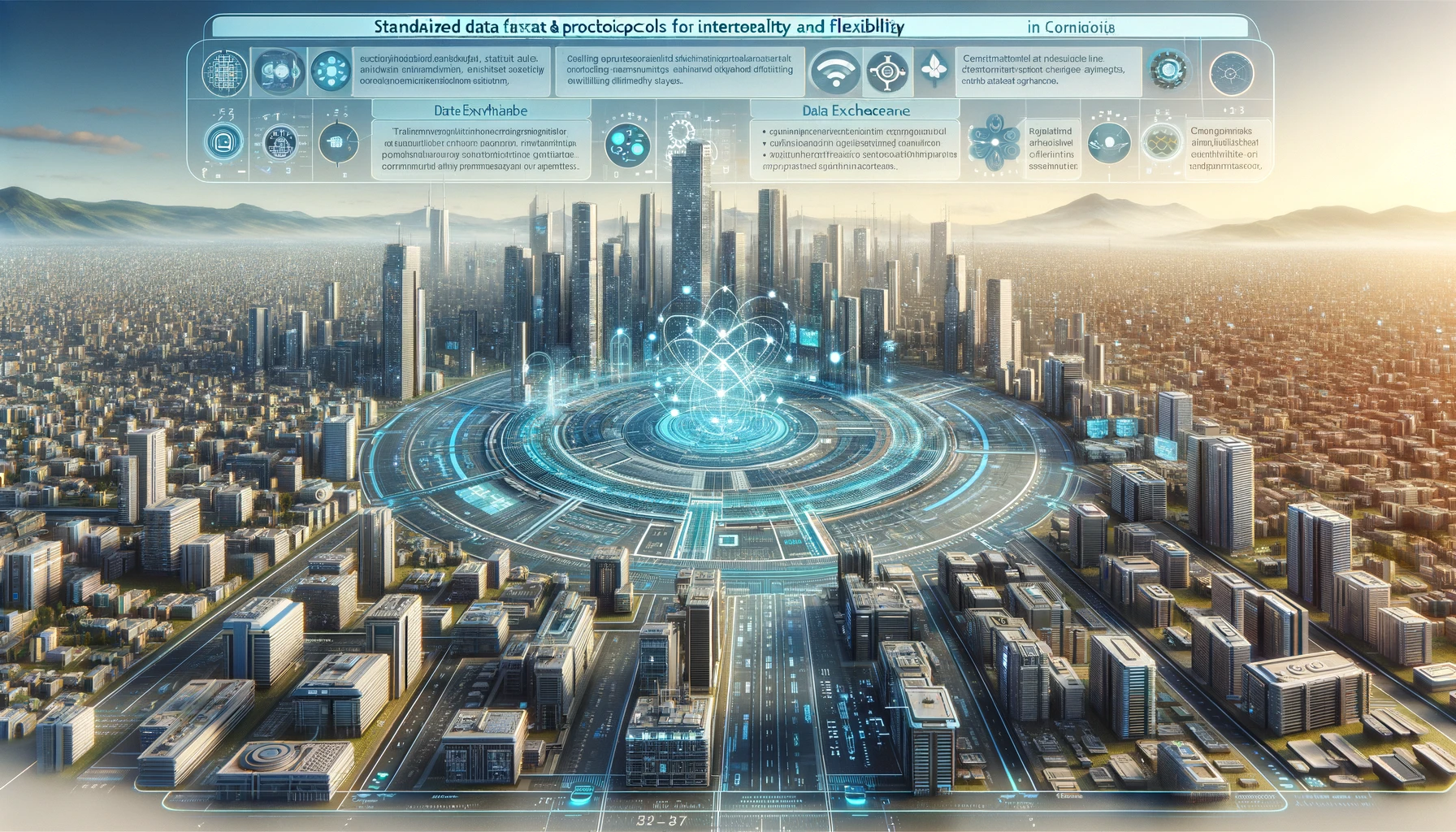
1. Standardized Data Formats and Protocols: Implementing standardized data formats and communication protocols to ensure different systems and devices can communicate and exchange data effectively.

Image
A wide conceptual diagram visualizing Standardized Data Formats and Protocols for Interoperability and Flexibility, especially in the context of a Quantum Intelligent Futuristic City Management System. The diagram should depict a futuristic cityscape with a focus on the technological infrastructure that enables interoperability and flexibility through standardized data formats and protocols. Include elements like integrated citywide networks, data exchange hubs, and smart systems using common communication standards. Show these systems as interconnected, enabling seamless data flow and interaction between different city services and technologies. Highlight the importance of standardization in ensuring compatibility and adaptability in a complex urban ecosystem. Emphasize the role of these standards in facilitating innovation, efficient service delivery, and the ability to respond to evolving urban needs. The overall design should convey a sophisticated, interconnected city that leverages standardization to achieve high levels of interoperability and flexibility in its operations and services.
Image
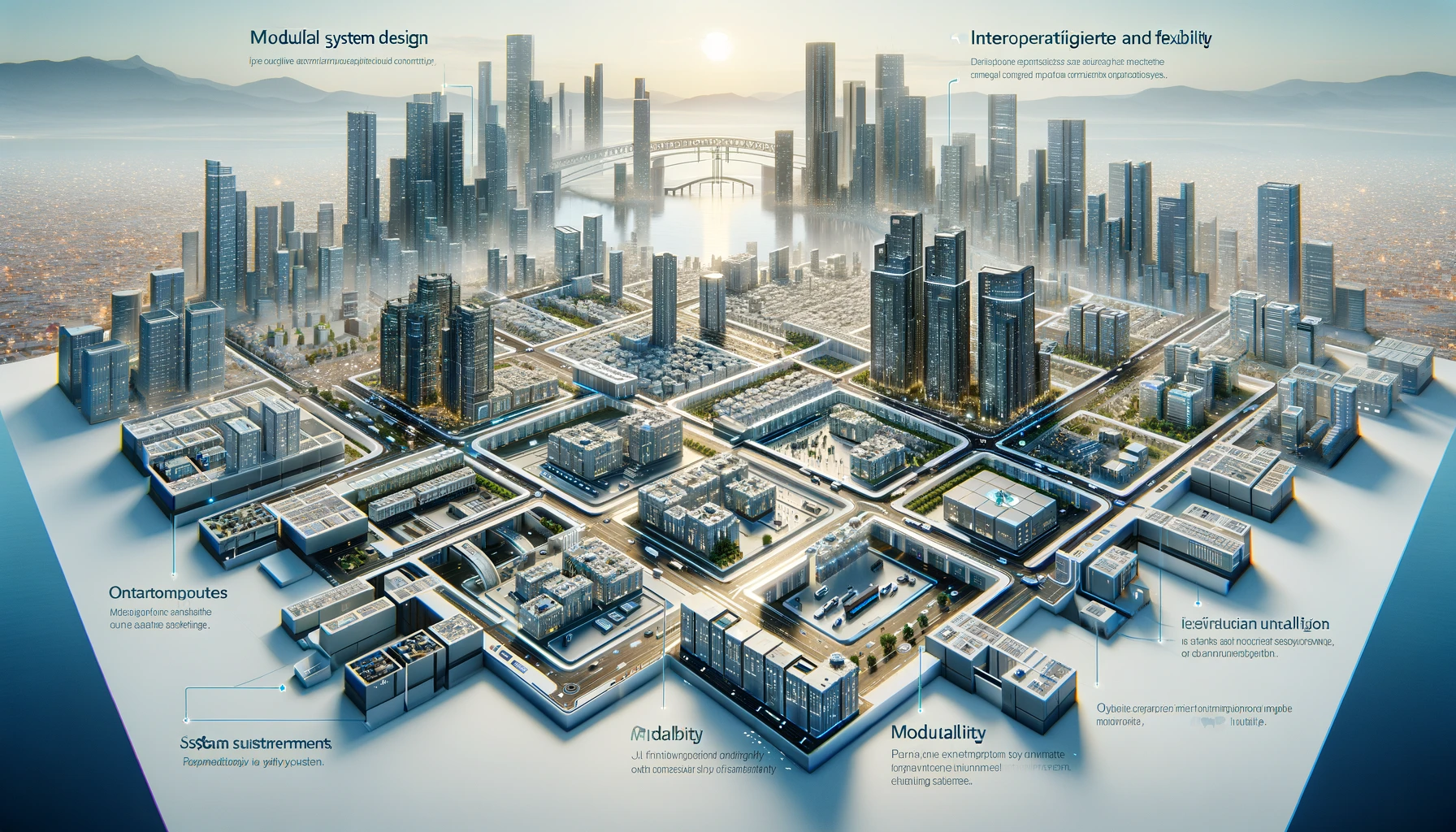
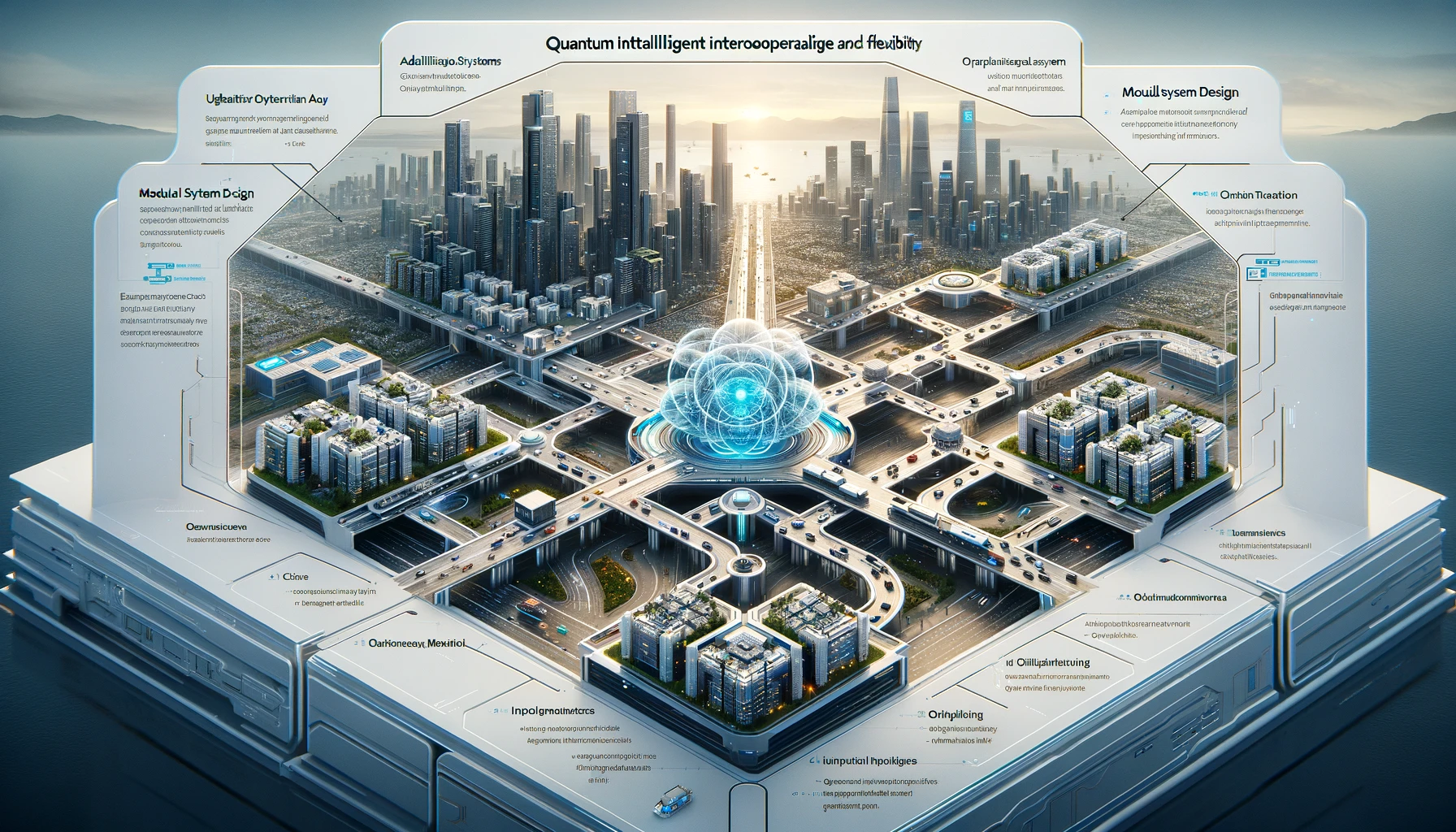
2. Modular System Design: Developing the city management system with a modular approach, allowing for easy integration of new technologies and components as they become available or as needs change.
Image
A wide conceptual diagram visualizing Modular System Design for Interoperability and Flexibility, especially in the context of a Quantum Intelligent Futuristic City Management System. The diagram should feature a panoramic view of a futuristic cityscape, illustrating the concept of modular system design in urban infrastructure. Include elements such as adaptable building modules, flexible transportation systems, and scalable utility networks. Show these systems as composed of interchangeable modules, enabling easy adaptation and reconfiguration to meet changing urban needs. Highlight the importance of modular design in enhancing the city's resilience, allowing for rapid response to growth, technological advancements, and societal changes. Emphasize the role of modularity in facilitating system upgrades and integration, ensuring ongoing interoperability and flexibility. The overall design should convey a city that embraces modularity in its architecture and infrastructure, promoting a dynamic, adaptable, and future-ready urban environment.
Image
3. Open APIs and Platforms: Using open APIs (Application Programming Interfaces) to facilitate the integration of third-party applications and services, promoting a flexible and extensible system architecture.
Image
A wide conceptual diagram visualizing Open APIs and Platforms for Interoperability and Flexibility, especially in the context of a Quantum Intelligent Futuristic City Management System. The diagram should depict a futuristic cityscape, focusing on the integration of open APIs (Application Programming Interfaces) and platforms. Include elements like interconnected digital networks, open-source data hubs, and collaborative software platforms. Show these components as key enablers of seamless data exchange and system integration across various urban services. Highlight the role of open APIs in facilitating the development of customizable and scalable solutions, enabling different systems and applications to communicate effectively. Emphasize the importance of open platforms in fostering innovation, collaboration, and technological agility. The overall design should convey a city that leverages open technologies to promote interoperability and flexibility, creating a versatile and dynamic urban ecosystem.
Image
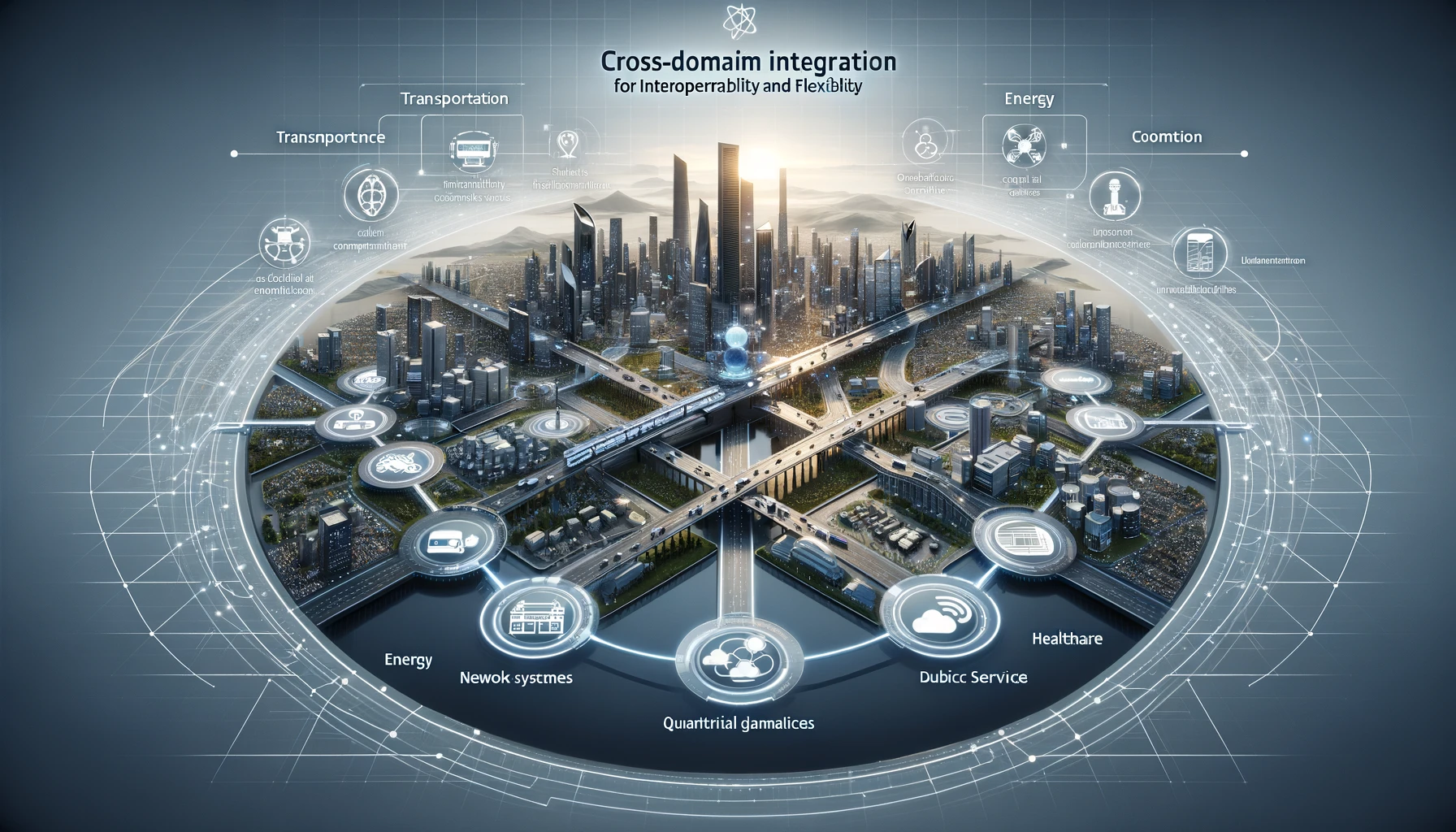
4. Cross-Domain Integration: Ensuring that different domains, such as transportation, energy, public safety, and healthcare, can interact and share data, leading to more efficient and coordinated city management.
Image
A wide conceptual diagram visualizing Cross-Domain Integration for Interoperability and Flexibility, especially in the context of a Quantum Intelligent Futuristic City Management System. The diagram should showcase a futuristic cityscape with a focus on the integration of various urban domains such as transportation, energy, public services, and healthcare. Include elements that represent the interconnectedness of these domains, like integrated network systems, shared data platforms, and collaborative operational centers. Show how these elements work together to create a cohesive and efficient urban ecosystem. Highlight the role of advanced technologies like IoT, AI, and cloud computing in facilitating this cross-domain integration. Emphasize the benefits of such integration, including improved resource management, enhanced service delivery, and a more responsive urban environment. The overall design should convey a city that efficiently and seamlessly integrates multiple domains, leveraging technology for greater interoperability and flexibility.
Image
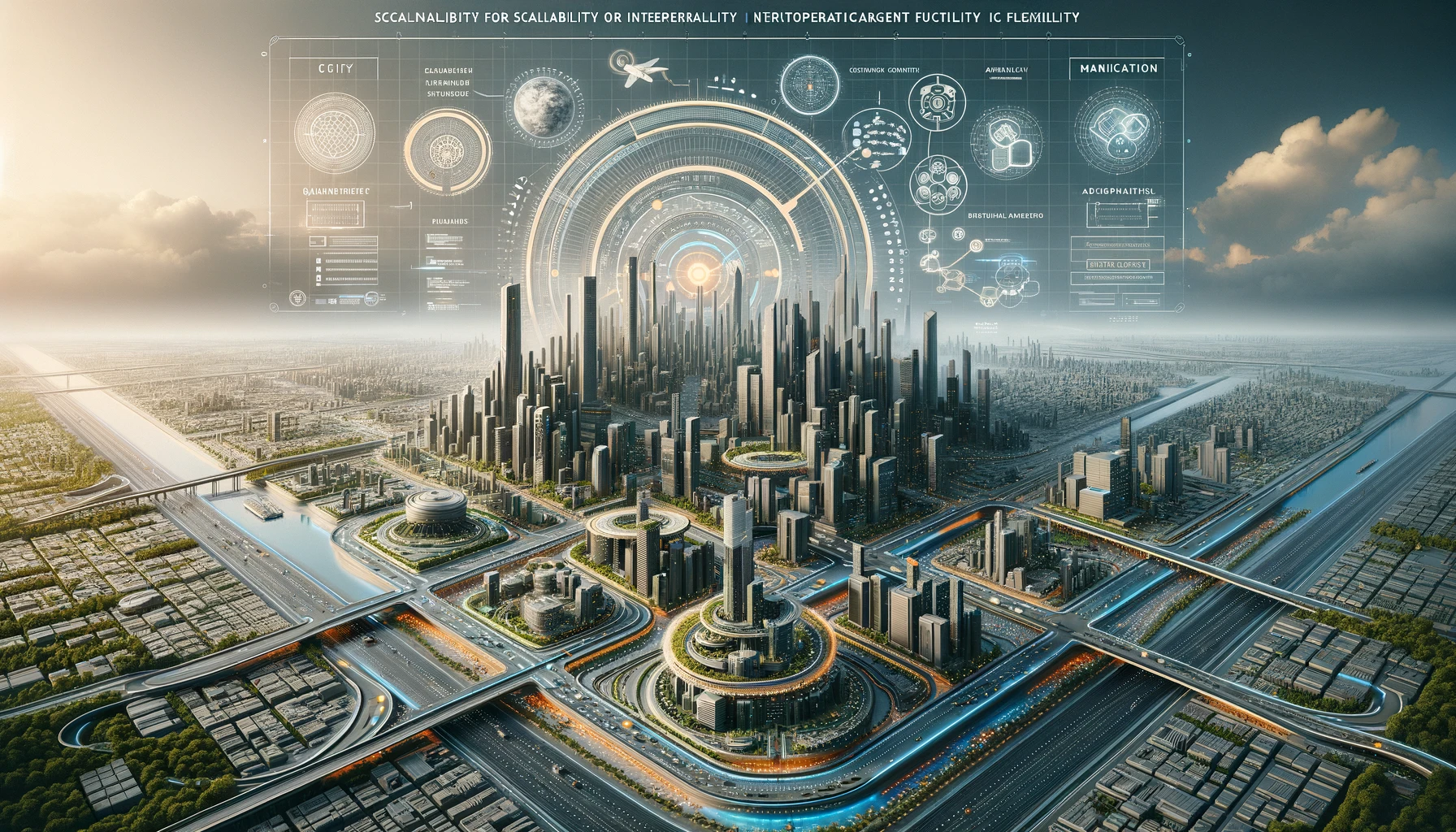
5. Scalability: Designing the system to scale up or down according to the city's growth, technological advancements, and changing requirements, without losing performance or functionality.
Image
A wide conceptual diagram visualizing Scalability for Interoperability and Flexibility, especially in the context of a Quantum Intelligent Futuristic City Management System. The diagram should depict a futuristic cityscape with a focus on scalable urban systems and infrastructure. Include elements that represent scalability, such as expandable network architectures, flexible urban planning designs, and adaptable public services. Show these systems as designed to easily accommodate growth and change, allowing the city to evolve and expand without compromising efficiency or functionality. Highlight the use of advanced technologies like cloud computing, modular construction, and dynamic resource allocation to facilitate scalability. Emphasize the importance of scalable systems in ensuring the city remains agile, responsive, and capable of meeting the changing needs of its citizens. The overall design should convey a city that is built for the future, with infrastructure and services that can adapt and grow as the city does.
Image
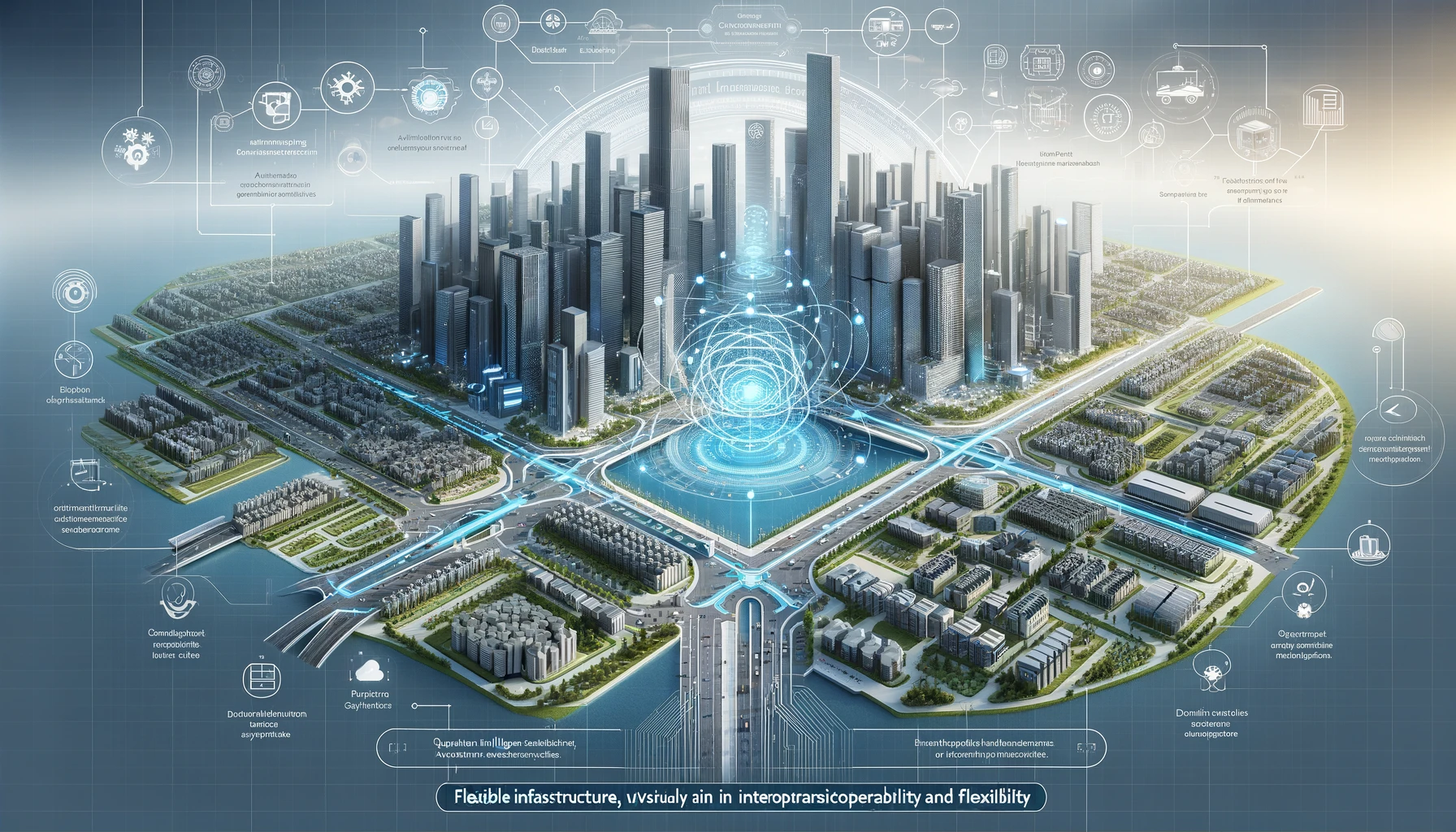
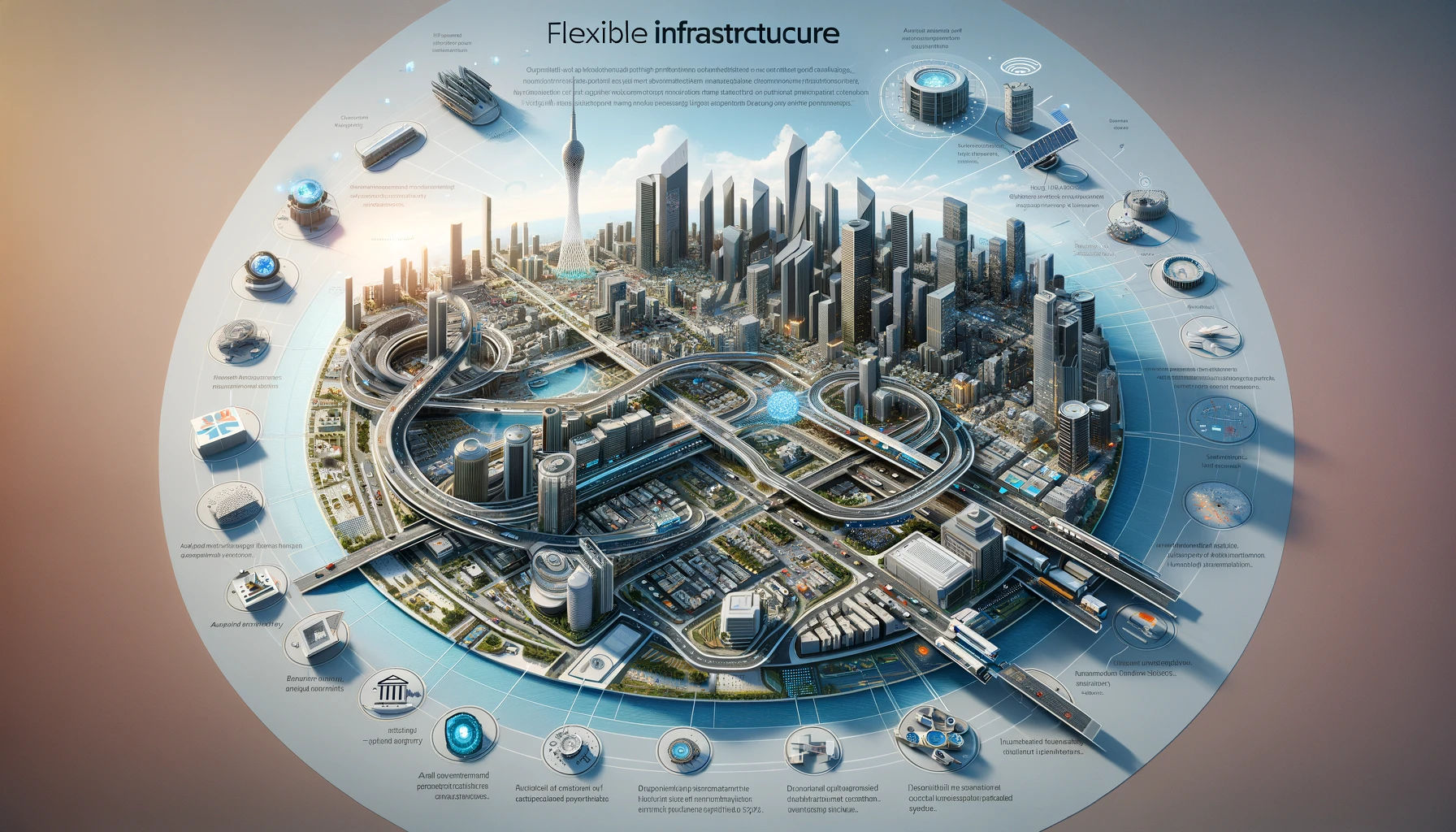
6. Flexible Infrastructure: Incorporating flexible infrastructure, like cloud computing and edge computing, to manage data processing and storage needs dynamically.
Image
Here are the wide conceptual diagrams visualizing Flexible Infrastructure for Interoperability and Flexibility, especially in the context of a Quantum Intelligent Futuristic City Management System. These diagrams illustrate a futuristic cityscape focusing on the concept of flexible infrastructure. The designs include elements such as adaptable building designs, reconfigurable public spaces, and dynamic transportation systems, shown as capable of adjusting to different uses and demands. This facilitates a versatile and resilient urban environment. The integration of smart technologies like modular construction techniques, automated systems, and IoT-enabled environments that enable this flexibility is highlighted. The importance of such flexible infrastructure in accommodating urban growth, technological changes, and evolving community needs is emphasized. The overall design conveys a city that is equipped to adapt and respond effectively to new challenges and opportunities, making it a dynamic and future-proof urban space.
Image
7. Adaptive Algorithms and AI: Utilizing AI and machine learning algorithms that can adapt to new data patterns and evolving urban scenarios, enhancing the system's ability to respond to unforeseen challenges.
Image
Here are the wide conceptual diagrams visualizing Adaptive Algorithms and AI for Interoperability and Flexibility, especially in the context of a Quantum Intelligent Futuristic City Management System. These diagrams feature a futuristic cityscape with a focus on the application of adaptive algorithms and artificial intelligence. The designs include elements such as AI-driven decision-making centers, adaptive traffic management systems, and smart energy grids. These systems are integral to the city's operations, using AI to analyze data, predict needs, and optimize performance. The role of adaptive algorithms in enabling the city to respond dynamically to changes and challenges, such as traffic flow adjustments, energy demand management, and emergency response optimization, is highlighted. The importance of AI and algorithmic adaptability in creating a smart, efficient, and responsive urban environment is emphasized. The overall design conveys a city that leverages advanced AI technologies for enhanced interoperability, flexibility, and resilience.
Image
8. User-Centric Design: Focusing on the end-users, be it city administrators or citizens, and ensuring the system is adaptable to their changing needs and preferences.
Image
Here are the wide conceptual diagrams visualizing User-Centric Design for Interoperability and Flexibility, especially in the context of a Quantum Intelligent Futuristic City Management System. These diagrams depict a futuristic cityscape, emphasizing the implementation of user-centric design principles in urban infrastructure and services. The designs include elements such as personalized public service interfaces, adaptable living spaces, and responsive urban amenities. These components are designed with the end-user in mind, ensuring ease of use, accessibility, and customization. The integration of feedback mechanisms and user engagement tools that enable continuous improvement and adaptation based on citizen needs and preferences is highlighted. The importance of user-centric design in creating a city that is not only technologically advanced but also deeply attuned to the experiences and requirements of its residents is emphasized. The overall design conveys a city that prioritizes the needs and well-being of its citizens, making it a flexible, inclusive, and human-centered urban environment.
Image
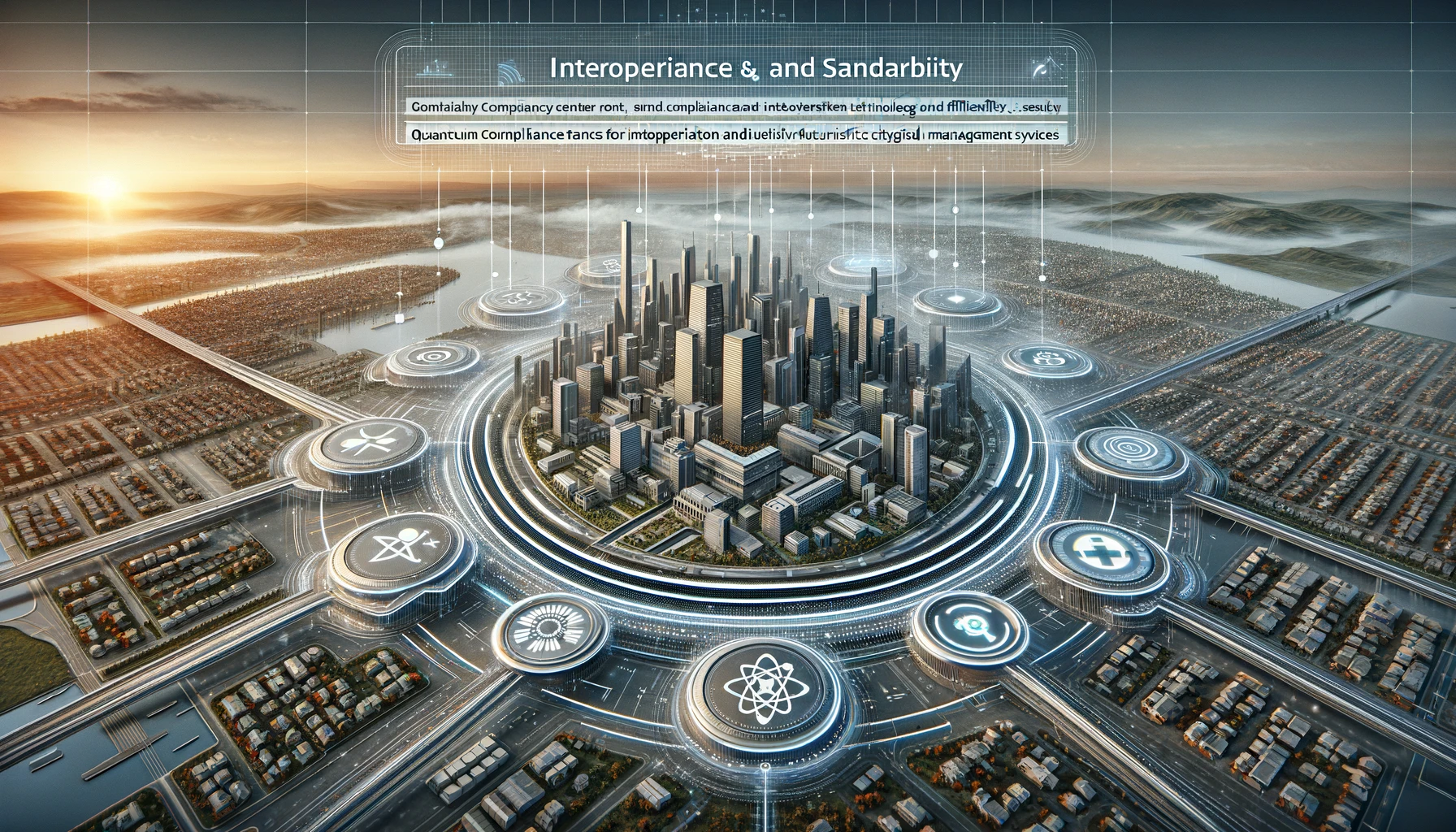
9. Compliance and Standards Adherence: Keeping up with international standards and regulatory compliance, ensuring the system can operate effectively in different regulatory environments.
Image
Here are the wide conceptual diagrams visualizing Compliance and Standards Adherence for Interoperability and Flexibility, especially in the context of a Quantum Intelligent Futuristic City Management System. These diagrams depict a futuristic cityscape, focusing on the integration of compliance and adherence to standards in urban systems and technologies. The designs include elements such as regulatory compliance centers, standardized technology frameworks, and certified public services. These components are shown as crucial for ensuring that all city operations and services meet established quality, safety, and efficiency standards. The role of compliance in maintaining system integrity, reliability, and interoperability across various urban domains is highlighted. The importance of adhering to international and local standards in fostering a safe, efficient, and harmonious urban environment is emphasized. The overall design conveys a city that rigorously applies and respects compliance and standards, ensuring its infrastructure and services are trustworthy and of high quality.
Image
10. Continuous Improvement and Learning: Implementing mechanisms for continuous feedback and learning, enabling the system to evolve based on user feedback, technological advancements, and best practices.
Image
Here are the wide conceptual diagrams visualizing Continuous Improvement and Learning for Interoperability and Flexibility, especially in the context of a Quantum Intelligent Futuristic City Management System. These diagrams showcase a futuristic cityscape, emphasizing the concept of continuous improvement and learning in urban systems. The designs include elements like AI-driven analytics centers, feedback loops, and innovation hubs. These systems are integral to the city's infrastructure, constantly analyzing data, learning from user interactions, and evolving to meet changing needs. The role of continuous learning in enhancing city services, adapting to new technologies, and responding to citizen feedback is highlighted. The importance of a culture of innovation and improvement in maintaining a dynamic, efficient, and user-responsive urban environment is emphasized. The overall design conveys a city that prioritizes adaptability and growth, using advanced technologies to continually refine and enhance its operations and services.

Let's work together